

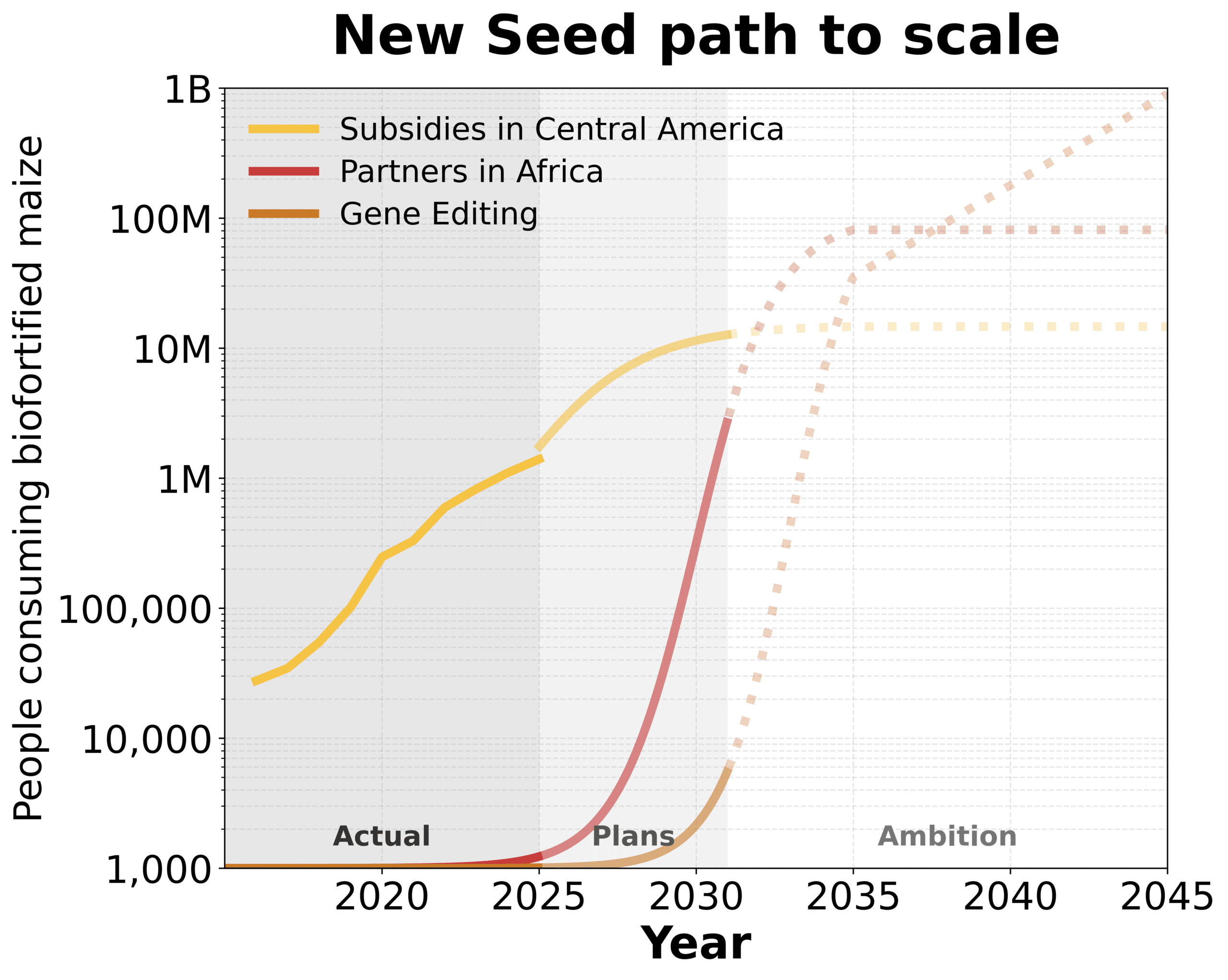
Our Goal: 1B People
To reach 1 billion people with better corn, we are using three strategies.
Central America: Help governments scale subsidies
10M better nourished by 2030
Sub-Saharan Africa: Breed biofortified seeds for local NGOs
100M better nourished by 2035
Global: Use gene editing to cut breeding costs by 90%
Our moonshot goal: 1B people by 2045
Subsidies in Central America
2030 Goal: 10 million people nourished
We began in Guatemala, where corn is central to daily life and malnutrition rates are among the highest in the world.
Our market-based subsidy model shows that:
- Biofortified seeds can be bred from the highest-yielding hybrids.
- Farmers adopt them at scale when they are affordable.
- Governments can sustain long-term programs that make biofortified seeds widely available.
Partners in Africa
2035 Goal: 100 million people nourished
Africa Has:
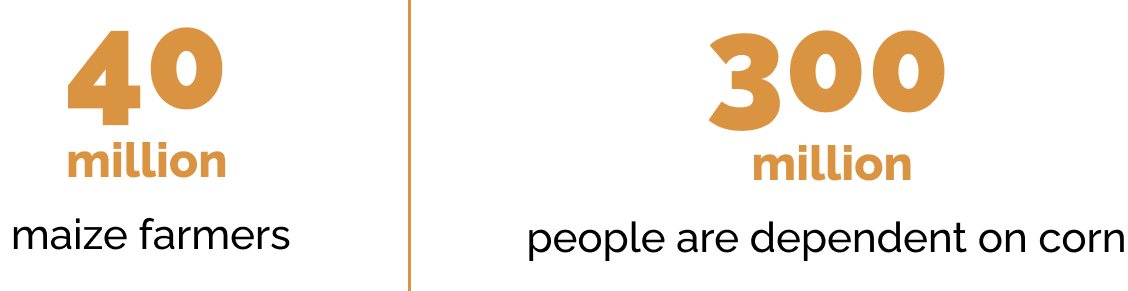
Our Strategy:
- Partner with programs already delivering seed to low-income
farmers (NGOs, social enterprises, governments). - Biofortify farmers' favorite seeds and newer high-yielding varieties.
- Support partners with production, marketing, and monitoring.
Gene Editing
2045 Vision: 1B people with better nutrition
New gene-editing tools could make the costs to biofortify new seeds so low that policies by governments and seed developers can make biofortification the norm in countries with malnutrition.
We are currently:
- Developing non-GMO edits that improve nutrition without reducing yield.
- Supporting country efforts to build regulatory frameworks for gene edited crops.
- Exploring biofortification gene editing in other crops.
We don’t have a fool proof plan for the next 20 years. But we think biofortified food could become as common as fortified flour or iodized salt—and that a combination of different strategies could get us to over 1B people.