

Los datos son el núcleo de todo lo que hacemos.
Impacto que medimos: Medimos cómo nuestras semillas afectan los ingresos de los agricultores, la resiliencia climática y la cantidad de nutrientes adicionales en el maíz que consumen y venden a otros.
Estudios de terceros: Estimamos nuestro impacto correlacionando estas cifras con ensayos controlados aleatorios y otros estudios que hemos apoyado o que ya existían.
Rentabilidad: Reunimos todas estas cifras para calcular la rentabilidad de nuestro programa. Creemos que si las personas a las que intentas ayudar obtuvieran más beneficios si se cancelara tu ONG y se les donara directamente el presupuesto, probablemente deberías hacerlo.
En nuestro sitio web se pueden consultar análisis detallados de nuestros datos. informes anuales. Proporcionamos conjuntos de datos previa solicitud y estamos trabajando para subir nuestros conjuntos de datos, protocolos y herramientas a Harvard Dataverse.
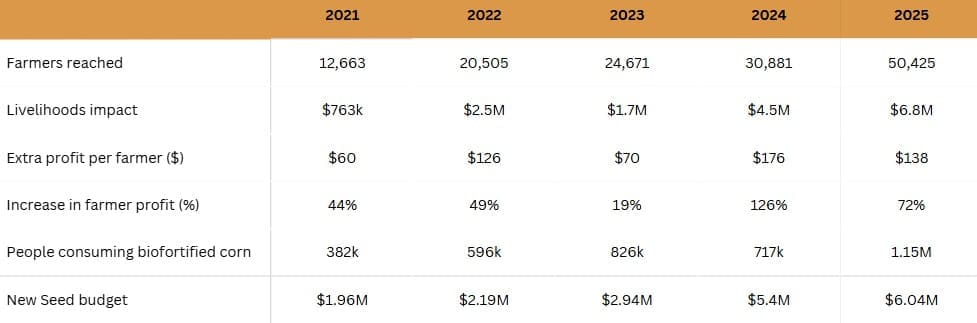
RESUMEN DEL IMPACTO

Lo que medimos
Nuestros sistemas internos de monitoreo y evaluación recopilan datos anuales sobre nuestro alcance, los rendimientos de los agricultores, los ingresos, las ventas y las tendencias de consumo para determinar la cantidad de maíz biofortificado que producen nuestros agricultores y estimar cómo se distribuye este grano nutritivo en los mercados nacionales. También supervisamos el contenido nutricional de nuestro maíz para calcular las cantidades adicionales de nutrientes que se incorporan a la dieta como resultado del consumo de maíz biofortificado. Nuestra metodología de monitoreo y evaluación se basa en dos herramientas:
Encuestas anuales a agricultores
Recopilamos información de contacto de los agricultores que plantan semillas biofortificadas a través de minoristas y programas de donación, y realizamos encuestas anuales con muestras representativas a nivel nacional de más de 500 agricultores. Con los datos de estas encuestas, podemos estimar:
- ¿A cuántas familias de agricultores llegamos?, basado en el tamaño promedio de las compras/donaciones y el intercambio de semillas con familiares y vecinos,
- Cuánto maíz biofortificado consumen a nivel doméstico,
- ¿Cuánto maíz llega a los mercados a través de las ventas?, y el precio promedio que obtienen los agricultores por sus cereales.
Parcelas contiguas
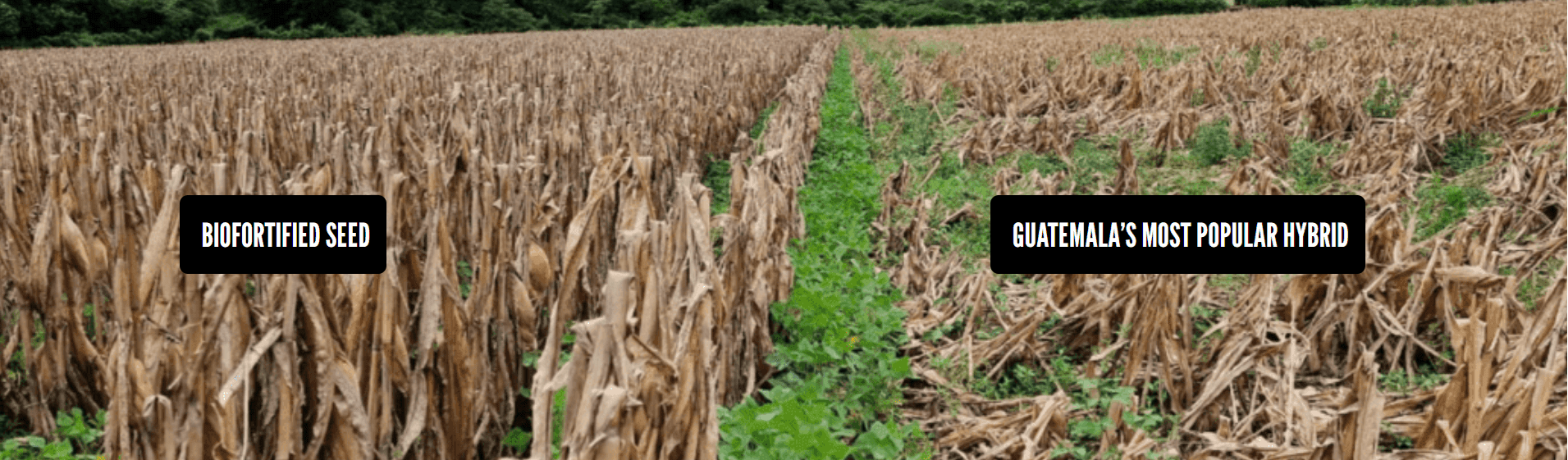
La genética de las semillas es solo uno de los muchos factores que afectan al rendimiento. Para generar datos que aíslen el efecto de la genética de las semillas y nos permitan comprobar su relevancia estadística, pedimos a unos 100 agricultores que planten maíz biofortificado y maíz convencional en parcelas contiguas y apliquen el mismo manejo a ambos. Esta metodología nos permite recopilar mediciones precisas sobre:
- Rendimientos e ingresos, comparando los costos de producción y la producción total, y calculando los ingresos y las ganancias netas de los agricultores,
- Resiliencia climática, mediante la medición de los daños causados a los cultivos en parcelas afectadas por sequías, tormentas, plagas y enfermedades,
- Nutrición, recogiendo muestras de grano de cada parcela y analizándolas en nuestro laboratorio interno para determinar su contenido en hierro, zinc y calidad proteica.
Estudios de terceros
Nos encantaría medir directamente cómo el consumo de nuestro maíz impacta en el crecimiento de los niños. Sin embargo, los determinantes de la estatura incluyen factores ambientales, socioeconómicos y nutricionales, y aislar el efecto del maíz biofortificado significaría dar seguimiento a miles de niños en comunidades participantes y de comparación durante varios años, con un costo de millones de dólares.
En su lugar, nos basamos en estudios ya existentes y ensayos controlados aleatorios que demuestran los efectos del maíz biofortificado en la nutrición y la salud. Cuando se necesitan estudios adicionales, los financiamos y apoyamos.
Estudios ya existentes:
- Gunaratna et al., 2008Los metaanálisis muestran que el maíz con proteína de calidad mejora la tasa de crecimiento infantil en altura y peso.
- Chomba et al., 2015: El zinc del maíz biofortificado es tan absorbible como el zinc de la harina fortificada.
- INCAP, 2021: Los análisis de la dieta indican que las familias agrícolas que consumen maíz biofortificado satisfacen la mayor parte de sus necesidades diarias de zinc.
- Cornell e INCAP, 2022-2023: El maíz con alto contenido en zinc mejoró los biomarcadores de zinc en mujeres y niños en comparación con el maíz convencional. (Se someterá a revisión por pares en febrero de 2026).
- CU Denver e INCAP, 2024-5 (en curso): Un ensayo controlado aleatorio sobre biodisponibilidad realizado con la Universidad de Colorado en Denver está evaluando cómo las tortillas elaboradas con maíz biofortificado afectan a la absorción de zinc y hierro en los niños guatemaltecos.
Rentabilidad
Creamos modelos de rentabilidad que comparan nuestros costos con los beneficios estimados de nuestro trabajo: mayores ingresos para los agricultores que cultivan nuestro maíz y una mejor salud y nutrición para las familias que consumen maíz biofortificado. Nuestros modelos completos están disponibles públicamente, por lo que cualquiera puede revisar nuestros métodos, fuentes de datos y supuestos.
A medida que recopilamos nuevos datos, perfeccionamos nuestras proyecciones o actualizamos nuestros métodos, publicamos periódicamente modelos actualizados. Los cambios se documentan en un registro de cambios incluido en cada modelo.
 English
  Spanish